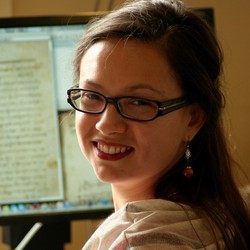
Cecilia Antonelli is a Lecturer (“Chargée de cours”) at the University of Geneva (UNIGE) in Switzerland and an Affiliated Researcher at the Institut romand des sciences bibliques (IRSB) of the University of Lausanne (UNIL), also in Switzerland.
Her research focuses on Christian “heresies” and ancient heresiology; the “construction” of memory of Christian origins; the systems of authority in the first Christian centuries; and on Biblical writings, scriptural testimonia, Christian and Jewish apocryphal literature, and the establishment of the New Testament canon.
Cecilia Antonelli is a member of the Association pour l’étude de la littérature apocryphe chrétienne (AELAC), of the Societas Novi Testamenti Studiorum (SNTS), and of the Société pour l’étude de la littérature apocryphe chrétienne (SELAC), as well as of the Groupe suisse d’études patristiques / Schweizerische patristische Arbeitsgemeinschaft (GSEP / SPAG) (Département de Patristique et Histoire de l’Église, Université de Fribourg) and of the Conférence universitaire de Suisse occidentale (CUSO).
After completing her studies in Classics with a particular emphasis on Ancient Christianity at “Roma Tre” University (Bachelor of Classics, 2006; Master in Ancient Philology, Literature, and History, 2008), she earned a PhD in Greek and Roman Civilization and Tradition from the same institution, as well as a PhD in Theology from the University of Geneva (2012), with a thesis conducted under joint supervision. Her professional trajectory began as a postdoctoral researcher in Geneva, supported by a Swiss Confederation Scholarship (2012–2013), followed by a post-doctoral position in Paris at the École pratique des hautes études (EPHE), Section des sciences religieuses (SSR), funded by the “Doc. Mobility” Scholarship from the Swiss SNSF (2013–2014). Subsequently, she served as a research and teaching associate focusing on the History of Early Christianity at the Faculty of Theology of the University of Geneva (2014–2017), and later as a “Senior SNSF Researcher” (“Chercheuse FNS Senior”) at the University of Lausanne (2017–2023). More recently, she held the position of Lecturer (“Chargée de cours”) at the University of Fribourg (Switzerland) for the 2023–2024 academic year, at the University of Lausanne during the 2024–2025 academic year, and at the University of Geneva during the autumn of 2025.
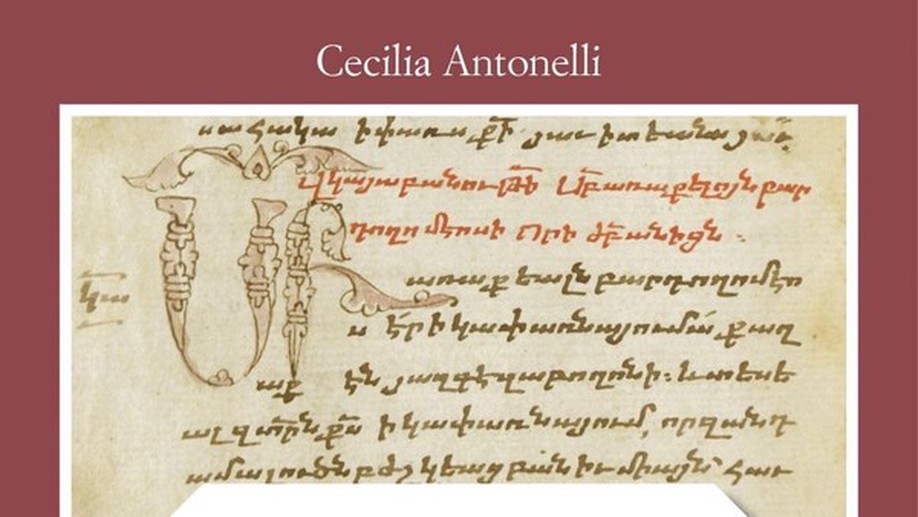
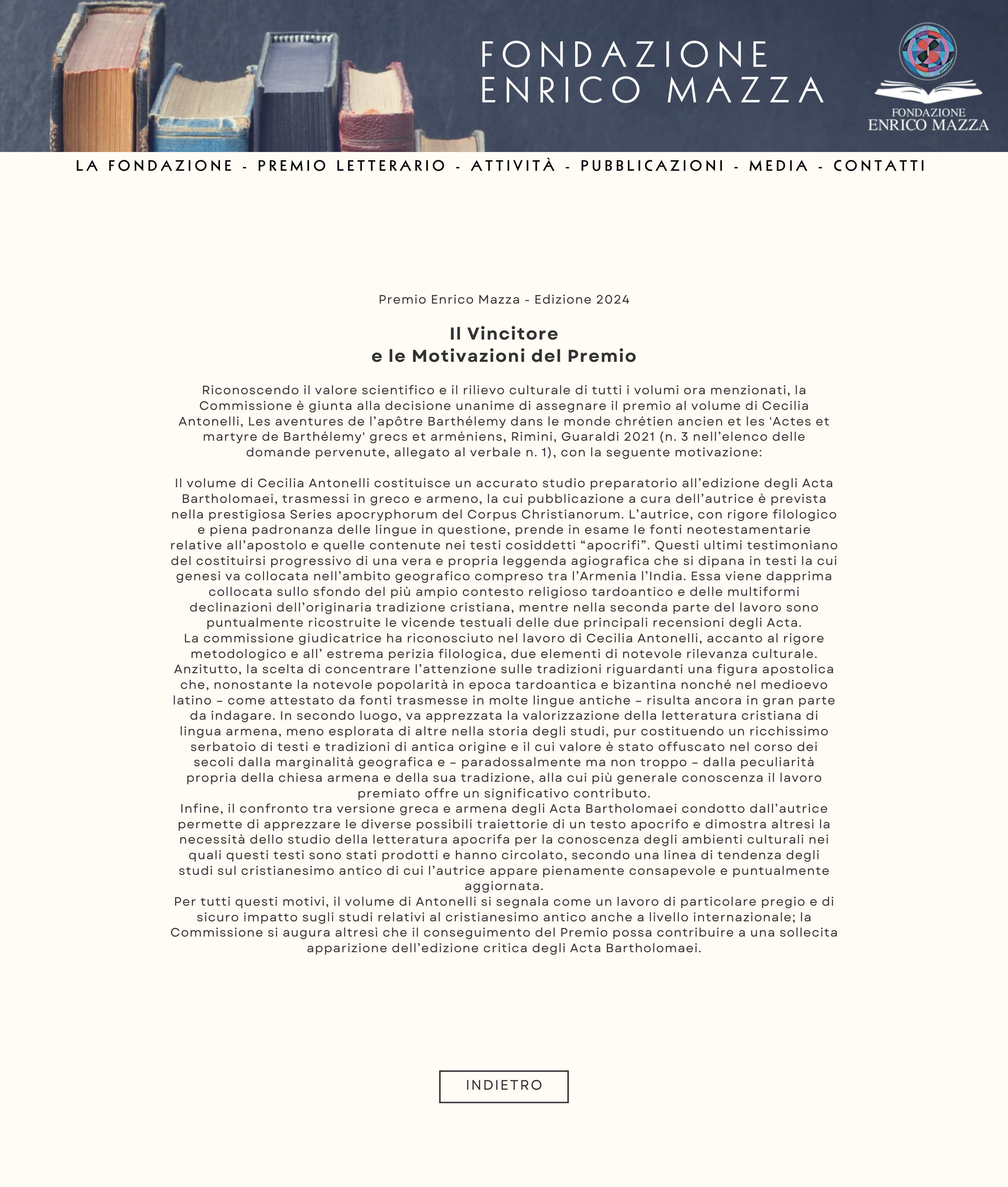
Her editio princeps of the Acts and Martyrdom of the Apostle Bartholomew in Greek (Weimar Q 729 or “Codex Froehner”), with introduction, Italian translation, and commentary, will be published as a volume of the Corpus Christianorum, Series Apocryphorum (CCSA), Brepols, including the text and translation of the ancient Armenian version of this Christian apocryphal text (expected publication: end of 2026).
A monograph that develops and expands the results of her PhD Thesis on the fragments of the early Christian author Hegesippus (2nd century) is being prepared and will be published under the title La mémoire oubliée des originnes chrétienne. Les fragments d’Hégésippe entre histoire et légende (Instrumenta patristica et medioevalia (IPM)), Brepols (expected publication: 2027).
While serving as a “Senior SNSF researcher” (“Chercheuse FNS Senior”) in the Digital Humanities project Éditer numériquement la littérature apocryphe chrétienne (ENLAC), funded by the Swiss National Science Foundation (SNSF), she began preparing the major electronic critical edition of the “Lives of the Prophets* (BHG 1585-1590) and related texts for the Corpus Christianorum, Series Apocryphorum (CCSA), published by Brepols.
PhD in Greek and Roman Civilization and Tradition / PhD in Protestant Theology, 2012
Roma Tre University (IT) / Université de Geneve (CH)
Ottimo / 6/6 (highest honours)
MA in Ancient Philology, Literature & History, 2008
Roma Tre University (IT)
110/110 e lode (highest honours)
BA in Classics, 2006
Roma Tre University (IT)
110/110 e lode (highest honours)
The session is intended to explore how Passion accounts functioned as sites of memory, that is, narrative spaces where groups of believers negotiated the meaning of Jesus’ suffering and death, and reshaped these traditions across time. Particular attention will be given to the role of apocryphal traditions in constructing plural memories of the Passion and their interaction with canonical writings. We welcome papers that address canonical and apocryphal texts, textual transmission, liturgical use, theological interpretation, and cultural reception of the Passion narratives. Contributions may also engage comparative perspectives, methodological approaches from memory studies and literary theory, or broader reflections on the dynamics of inclusion, exclusion, and re-appropriation in the making of Christian identity.
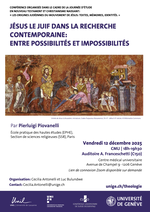
Journée d’études “CUSO” en Nouveau Testament et Christianisme Naissant. Invited keynote speaker: Pierluigi Piovanelli (EPHE, SSR, Paris)
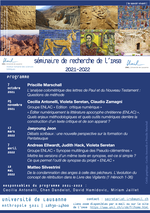
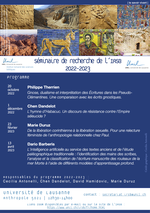
Cycle de séminaires scientifiques organisés par l’Institut Romand des Sciences Bibliques (IRSB)
Invitation by: Mauro Pesce (Università di Bologna), Enrico Norelli (Université de Genève), and Claudio Zamagni (Università “La Sapienza”, Rome)
Invitation by: Gabriella Aragione (University of Strasbourg)
Invitation by: Paul Dilley (University of Iowa)
Invitation by: Michele Cutino (Université de Strasbourg)
Invitation by: Scientific Committee of “Sources Chrétiennes”
Invitation by: André-Louis Rey (Université de Genève) and the Committee of GSEP
Invitation by: Janet Spittler, President of “North American Society for the Study of Christian Apocryphal Literature (NASSCAL)” (University of Virginia)
Invitation by: Michele Cutino and Christophe Guignard (University of Strasbourg)
Invitation by: SNTS Scientific Committee (Jens Schröter, Janet Spittler and Simon Butticaz)
75th General Meeting of the Studiorum Novi Testamenti Societas (SNTS)
Invitation by: Alberto D’Anna, Professor of “Letteratura cristiana antica”, et Massimo Giuseppetti, Professor of “Lingua e letteratura greca” (Università degli Studi “Roma Tre”)
Scienze dell’antichità e Digital Humanities – buone pratiche, frontiere teoriche e prospettive di ricerca
Invitation by: Simon Butticaz, Professor of “Nouveau Testament et traditions chrétiennes anciennes” (Université de Lausanne)
Invitation by: Alberto D’Anna, Professor of “Letteratura cristiana antica” (Università degli Studi “Roma Tre”), and Maria Lupi, Professor of “Storia del cristianesimo e delle chiese” (Università degli Studi “Roma Tre”).
Intorno al confine. Esperienze religiose tra marginalità ed esclusione in Europa e America. Seminario internazionale di studio italo-cileno.
Invitation by: Gian Domenico Cova, Professor of “Ebraico ed Esegesi dell’Antico Testamento” (Facoltà Teologica dell’Emilia Romagna – FTER), Camillo Neri, Professor of “Lingua e lettera- tura greca” (Università di Bologna) and Enrico Norelli, Professor of “Histoire du christianisme des origines” (Université de Genève)
Invitation by: Scientific Committee of the “Consulta Universitaria di Letteratura Cristiana Antica (CULCA)”
Invitation by: Simon Butticaz, (Professor of “Nouveau Testament et traditions chrétiennes anciennes”, Université de Lausanne) and Enrico Norelli (Professor of “Histoire du christianisme des origines”, Université de Genève)
Invitation by: Mauro Pesce, Professor of “Storia del cristianesimo” (Alma mater studiorum –Università di Bologna)
Invitation by: Anne-Catherine Baudoin (École normale supérieure, Paris)
Invitation by: Simon Claude Mimouni (EPHE)
Dans le cadre des conférences « Origines du christianisme », Directeur d’études Simon Claude Mimouni
Invitation by: Jean-Daniel Dubois (EPHE)
Dans le cadre des conférences « Gnose et manichéisme », Directeur d’études Jean-Daniel Dubois
Invitation by: Jacques-Noël Pérès and Muriel Debié (ELCOA / ICP)
Dans le cadre du cours « Les littératures apocryphes », Coordination Jacques-Noël Pérès et Muriel Debié
Invitation by: Jean-Daniel Dubois (EPHE)
Dans le cadre des conférences « Gnose et manichéisme », Directeur d’études Jean-Daniel Dubois
“Initiation au copte sahidique” (SA 2014) et “Lecture de textes sahidiques” (SP 2015) — Acquisition des éléments fondamentaux et des éléments complexes de la langue copte, notamment sahidique, et lecture de textes, Nathalie Bosson Aufrère, Unige
Le cours, qui associe les deux modules indiqués, a pour objectif la maîtrise des fondamentaux de la grammaire de la langue sahidique. Les notions à acquérir étant vastes et pour certaines complexes (système verbal, phrase nominale et phrase coupée notamment), le programme du premier module se poursuit dans le cadre du deuxième, afin d’approfondir les faits exposés dans les différents chapitres, grâce à de nombreux exemples (version et thème). Le cours privilégie une approche systématique des faits linguistiques. Les connaissances théoriques sont mises en application grâce à un ensemble d’exercices et de textes, présentant des difficultés croissantes destinées à développer l’approche analytique et inductive de la langue. Une fois la grammaire terminée, l’étudiant(e) se plonge dans la lecture de morceaux choisis de la littérature copte.
Note d’examen final : 5.75 / 6 (maximum des points = 6 / 6)
« Les rouleaux de la mer Morte : La « Règle de la communauté » (« Serekh Ha Yahad ») », Prof. Daniel extsc{St"okl Ben Ezra} (EPHE, SSHP) / « Social History from Early Rabbinic Texts », Prof. Martin Goodman (University of Oxford)
a.a. 2013-2014, lundi 11h–13h.
« Grammaire, traduction et méthodes de traduction des textes coptes », Anna Van den Kerchove, LEM/CERL, Institut protestant de théologie (IPT), Paris.
Semestres d’automne (SA) 2013 et semestres de printemps (SP) 2014 (2 heures hebdomadaires annuelles). Dernier état de la langue égyptienne, le copte est utilisé en Égypte à partir des années 300. Sa connaissance donne accès à une importante littérature, comprenant en particulier des traductions de textes grecs, tels que les écrits du Nouveau Testament mais aussi les écrits des codices découverts près de Nag Hammadi. Ces écrits sont importants pour l’histoire des religions, l’histoire des idées et de la philosophie.
“Grammaire de l’hébreu biblique”, Jürg Hutzli (UNIL) et Claire-Sybille Andrey (UNIGE)
Hébreu I, semestres d’automne (SA) 2012 et semestres de printemps (SP) 2013 (3 heures hebdomadaires annuelles ainsi qu’une semaine intensive en décembre 2012). Introduction à la langue hébraïque classique et acquisition des notions fondamentales de grammaire et de syntaxe. Une session intensive d’hébreu a eu lieu du lundi 17 au jeudi 20 décembre 2012.
Note d’examen final : 6 / 6 (maximum des points)
“Initiation à la langue arménienne ancienne I”, Valentina Calzolari Bouvier, Unige. Le séminaire vise à offrir aux étudiants les connaissances de base de la langue arménienne ancienne, avec une introduction à la version de textes en arménien ancien.
Langue arménienne ancienne I, semestres de printemps (SP) 2011 (2 heures hebdomadaires)